The Amazon rainforest is one of the most biodiverse ecosystems on Earth — mysterious, breathtaking, and sometimes misunderstood. When travelers imagine the jungle, they often picture lurking predators, venomous snakes, and piranha-filled rivers. But how dangerous is Amazon wildlife really?
If you’re planning a trip to the Amazon — whether in Peru, Brazil, Colombia, or Ecuador — understanding the truth about its wildlife risks can help you travel confidently and safely.
Let’s explore the most dangerous animals of the Amazon, separate myth from reality, and explain what travelers genuinely need to know.
🌎 Is the Amazon Rainforest Dangerous for Tourists?
The short answer? Not as dangerous as movies make it seem.
Millions of travelers visit the Amazon each year without incident. Animal attacks are extremely rare — especially on guided tours. Most wildlife avoids humans entirely.
The real risks in the Amazon are:
- Environmental factors (heat, humidity, dehydration)
- Insect bites
- Remote medical access
- Getting lost without a guide
Wild animal attacks are statistically uncommon. Most dangerous species are shy and defensive rather than aggressive.
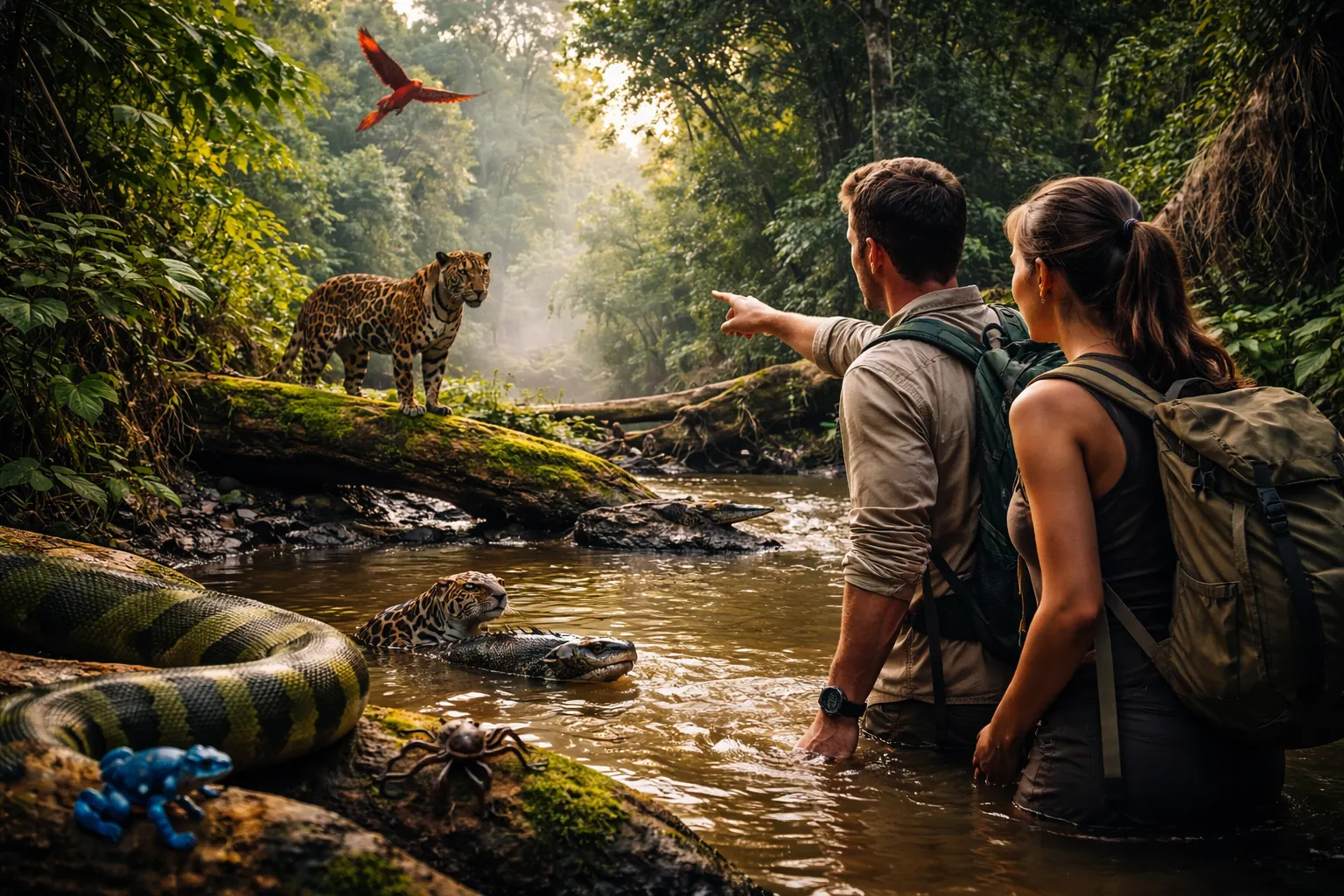
🐆 Most Dangerous Animals in the Amazon Rainforest
🐆 Jaguar – The Apex Predator
The Jaguar is the largest big cat in the Americas and the top predator of the Amazon.
Are jaguars dangerous to humans?
In theory, yes. In reality, attacks are extremely rare. Jaguars avoid human contact and prefer hunting deer, capybaras, and caimans.
For travelers: Jaguar sightings are a privilege — not a threat.
🐍 Green Anaconda – Myth vs. Reality
The Green Anaconda is one of the heaviest snakes in the world.
Despite sensational stories, verified attacks on humans are exceptionally rare. Anacondas prefer fish, birds, and medium-sized mammals.
Swimming in murky riverbanks without a guide is riskier than the snake itself.
🐊 Black Caiman – River Predator
The Black Caiman can grow over 5 meters long and is a powerful aquatic predator.
While capable of harming humans, attacks typically happen only when:
- People swim in remote, unmonitored areas
- Caimans feel threatened
- Food conditioning occurs
Guided river excursions significantly reduce risk.
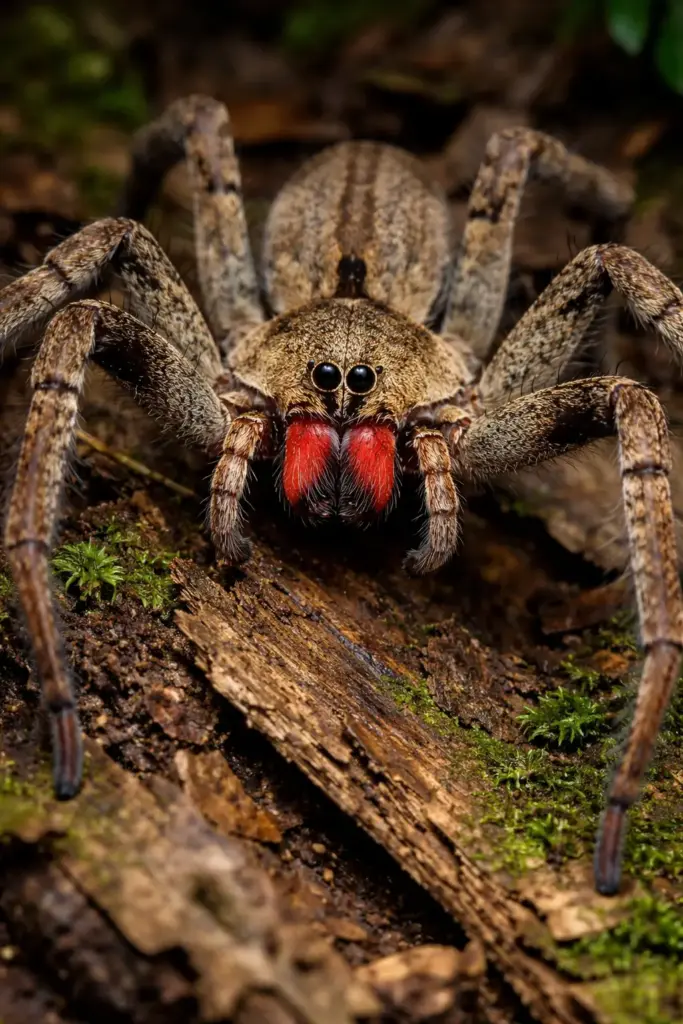
🕷 Brazilian Wandering Spider – Highly Venomous
The Brazilian Wandering Spider is considered one of the most venomous spiders in the world.
Bites are rare but medically significant. These spiders hide in foliage and occasionally inside boots or gear — which is why guides recommend shaking out shoes.
🐸 Poison Dart Frog – Tiny but Toxic
The Poison Dart Frog carries potent toxins on its skin.
Important note: They are poisonous, not venomous. Touching them can be dangerous; observing them is safe.
⚡ Electric Eel – Shocking River Hazard
The Electric Eel can produce electric shocks strong enough to stun prey.
Dangerous? Potentially — but attacks on swimmers are rare and usually defensive.
🐟 Piranhas – Fact vs. Fiction
The Piranha have sharp teeth and powerful jaws.
Despite their reputation, piranha attacks on humans are uncommon and usually involve feeding frenzies during drought conditions.
🐜 Bullet Ant – The Most Painful Sting
The Bullet Ant delivers what many describe as the most painful insect sting in the world.
The pain is intense but rarely life-threatening unless allergic reactions occur.
🧪 Venomous vs. Poisonous: What’s the Difference?
- Venomous animals inject toxins (snakes, spiders, ants).
- Poisonous animals release toxins when touched or eaten (poison dart frogs).
Knowing the difference helps travelers understand real risks.
🌊 Amazon Jungle Survival Dangers
Beyond animals, the Amazon presents environmental challenges:
- Strong river currents
- Heat exhaustion
- Dehydration
- Dense terrain
- Remote locations
Wildlife is rarely the primary danger — poor preparation is.
🛡 Amazon Rainforest Safety Tips for Travelers
✔ Travel With Certified Guides
Professional guides understand wildlife behavior and avoid risky zones.
✔ Wear Protective Clothing
Long sleeves, boots, and insect repellent reduce exposure.
✔ Avoid Swimming in Unverified Areas
Always ask guides about river safety.
✔ Do Not Touch Wildlife
Even small creatures can carry toxins.
✔ Shake Out Boots and Gear
Prevents accidental spider encounters.
🌿 Final Thoughts: Should You Be Afraid of Amazon Wildlife?
The Amazon rainforest is not a death trap — it’s a complex ecosystem deserving respect.
The most dangerous animals in the Amazon are fascinating, powerful, and rarely interested in humans. With proper precautions and guided tours, your Amazon adventure can be safe, unforgettable, and deeply inspiring.
For travelers, the jungle is not about fear — it’s about awareness, preparation, and respect for nature.