Iquitos feels like a place the modern world forgot to tame. Deep in Peru’s Loreto Region and surrounded on all sides by dense Amazon rainforest, it is the largest city on Earth that cannot be reached by road. You arrive by boat along winding rivers or by plane descending over endless green canopy, and from the first moment, the city’s isolation shapes everything you experience.
This separation has protected Iquitos in remarkable ways. Traditions remain strong, nature presses close to daily life, and the rhythms of the rivers still matter. For travelers looking beyond polished destinations, Iquitos offers something rare: a living, breathing Amazon city where adventure and authenticity are part of everyday life.
Geographic Overview
Where Is Iquitos Located in Peru?
Iquitos sits in northeastern Peru, where the Amazon, Nanay, and Itaya rivers converge. Water defines the city’s geography, economy, and culture, acting as both highway and lifeline. Its position deep within the Amazon Basin gives it immense ecological importance and an ever-present sense of wildness.
Iquitos Map and Accessibility
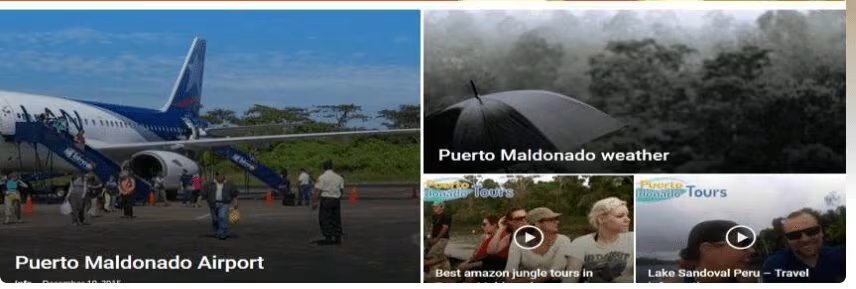
Despite its remoteness, Iquitos is a vibrant urban center. Neighborhoods such as Punchana, Belén, and San Juan Bautista spread along the riverbanks, blending colonial-era buildings with modern development. The city’s main gateway is Coronel FAP Francisco Secada Vignetta International Airport, which connects Iquitos to Lima and other major Peruvian cities, making air travel the primary link to the outside world.
Climate and Weather
Iquitos Weather Patterns
Life in Iquitos unfolds under a tropical rainforest climate. Heat and humidity are constant companions, with temperatures usually hovering between 71°F (22°C) and 89°F (32°C). Rain can arrive suddenly, drumming on rooftops before disappearing just as quickly.
The wetter season runs from November through May, when rivers swell and the jungle feels especially alive. From June to October, rainfall eases slightly, revealing river beaches and making travel a bit easier. No matter the season, visitors quickly learn to adapt, embracing rain as part of the Amazon’s character.
Cultural and Historical Significance
What Is Iquitos Known For?
Iquitos rose to prominence during the rubber boom of the late 19th and early 20th centuries, when fortunes were made almost overnight. That wealth left behind striking landmarks, including the famous Iron House, attributed to Gustave Eiffel. These grand structures stand as reminders of a dramatic and sometimes turbulent past.
Today, Iquitos is best known as a cultural crossroads and a launch point for Amazon expeditions. Markets buzz with energy, music spills into the streets, and riverboats come and go, carrying people and stories deep into the rainforest.
The People of Iquitos
The heart of the city lies with its people, known as Iquiteños. A rich mix of indigenous communities and mestizo traditions shapes daily life, from food and language to festivals and beliefs. Women play a central role in preserving culture, especially through cooking, crafts, and traditional celebrations.
In markets and neighborhood gatherings, these traditions are on full display. Bright fabrics, rhythmic dances, and ancestral recipes connect the present-day city to generations that came before.