Natural Habitat and Distribution in South America
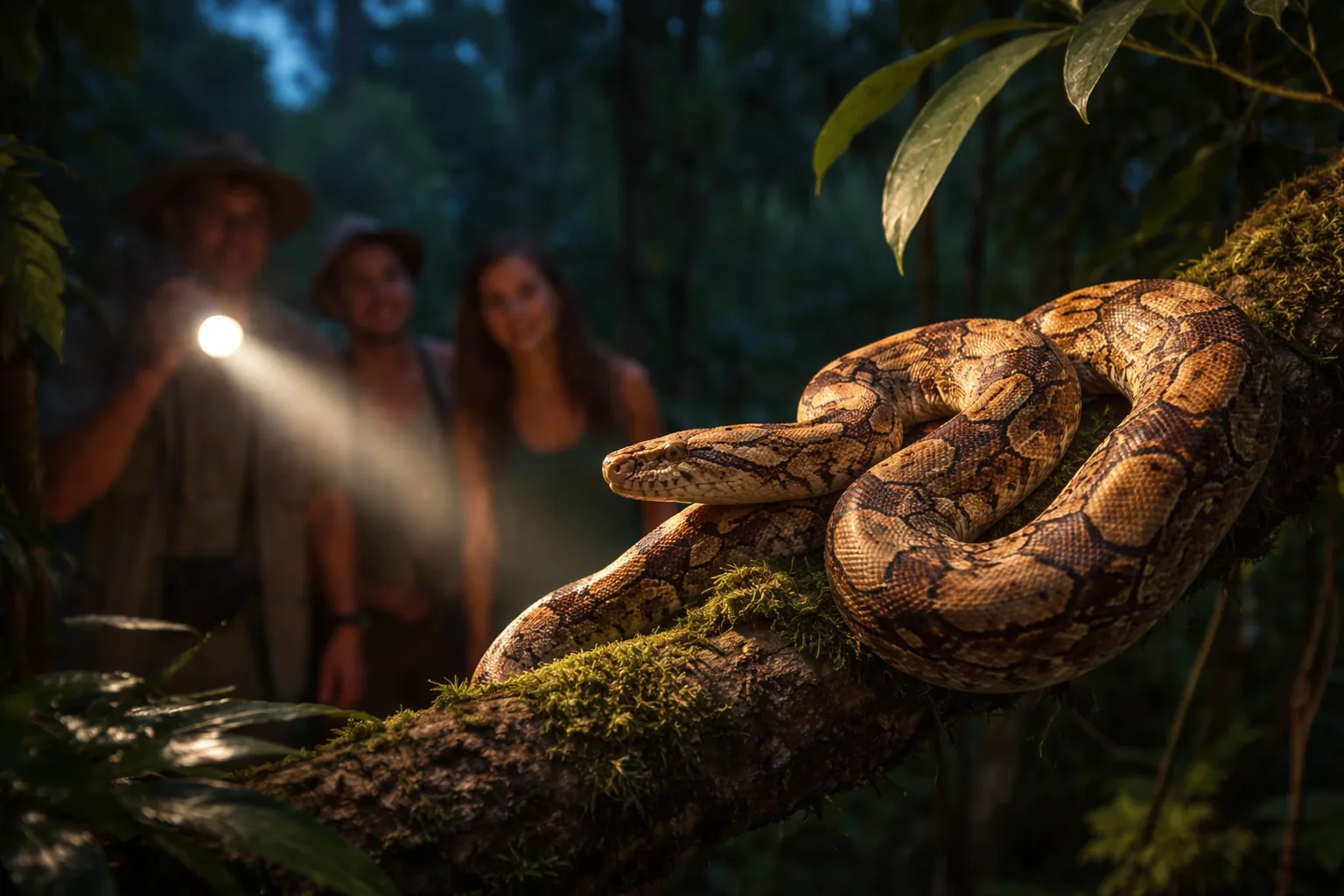
The boa constrictor (Boa constrictor) is one of the most widespread large snakes in the Americas. It ranges from Mexico down through Central America and across much of tropical South America. In Peru, they are especially common in lowland rainforest regions such as Loreto and Madre de Dios.
Within the vast Amazon Rainforest, boas thrive in humid tropical ecosystems—riverbanks, flooded forests, palm swamps, and terra firme jungle. They are semi-arboreal, meaning they spend time both on the ground and in trees. Young boas often stay higher in branches, while larger adults prefer the forest floor or dense undergrowth.
Travelers exploring jungle trails or cruising narrow tributaries may find boas resting near water sources, especially where rodents and birds are abundant.
Boa Constrictor vs Green Anaconda
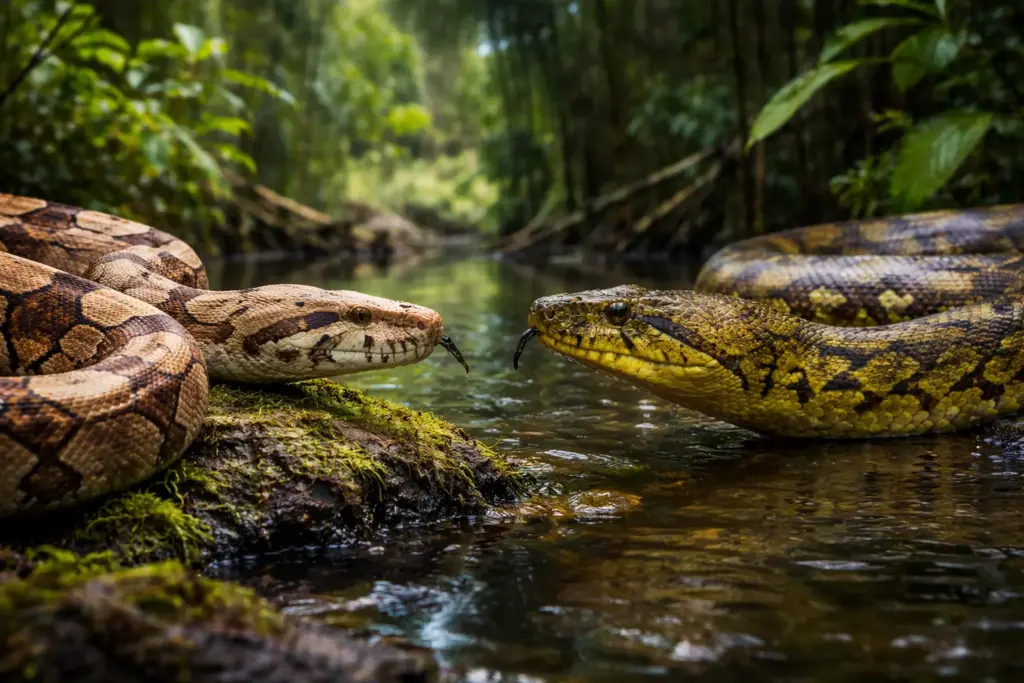
Visitors frequently ask about the difference between a boa constrictor and the famous Green Anaconda.
The green anaconda is heavier and typically associated with swamps and slow-moving waters. It is often larger in mass, though not necessarily much longer than a big boa. The boa constrictor, by contrast, has a more slender body and distinctive saddle-shaped markings along its back.
While anacondas are strong swimmers and more aquatic, boas are more versatile and can be found climbing trees or moving through forest undergrowth. For wildlife travelers, boas are often easier to spot on guided night walks than anacondas.
Behavior, Diet, and Size
Boa constrictors are non-venomous snakes that kill their prey through constriction. They wrap around animals such as rodents, birds, bats, and occasionally monkeys, tightening with each exhale until the prey can no longer breathe.
Adult boas in Peru typically range between 2 to 3 meters (6–10 feet), though larger specimens exist. Despite their size, they are generally calm animals that avoid confrontation with humans.
They are primarily nocturnal hunters. This is why many Amazon wildlife tours include guided night walks—because that is when the forest truly comes alive with snake activity.
Where to See Boa Constrictors in Peru’s Amazon
Iquitos and the Northern Amazon
The region around Iquitos is one of the most accessible gateways into the Amazon. Surrounded by rivers and dense forest, it offers excellent opportunities for wildlife sightings.
Travelers on Amazon river cruises departing from Iquitos often explore tributaries where boas hunt along the banks. Night excursions by small boat can reveal snakes resting in branches just meters above the water.
Lodges near the Pacaya-Samiria region also report frequent boa sightings, particularly during guided jungle treks.
Tambopata and Madre de Dios
Further south, the Tambopata National Reserve is another hotspot for rainforest wildlife. Known for its clay licks and incredible biodiversity, Tambopata also offers prime habitat for snakes.
The broader Madre de Dios region contains pristine lowland forest, oxbow lakes, and river systems where boas thrive. Here, specialized jungle tours focus on herping—searching for reptiles and amphibians.
Tambopata wildlife tours often include night walks that dramatically increase your chances of encountering a boa constrictor in its natural environment.
Amazon River Cruises and Jungle Lodges
An Amazon River cruise provides a comfortable way to explore remote habitats. Small ship expeditions venture into narrow tributaries inaccessible to larger vessels.
Luxury Amazon river cruises combine expert naturalist guides with small group excursions, allowing travelers to experience close-up wildlife encounters responsibly.
Alternatively, eco-lodges deep within the rainforest offer immersive experiences. Staying several nights increases your odds of seeing elusive species, including boas.
Best Time and Conditions for Snake Spotting
Dry vs Rainy Season
The Amazon has two main seasons: high water (rainy) and low water (dry). Each offers different advantages for wildlife viewing.
During the high-water season, boats can access flooded forests where snakes may rest in low branches above water. In the dry season, trails are easier to walk, making terrestrial snake encounters more common.
Boa constrictors can be seen year-round, but sightings are often more frequent during warm, humid evenings.
Night Walks and Guided Jungle Tours
If seeing a boa constrictor is high on your bucket list, prioritize guided night tours. Snakes are far more active after sunset.
Professional guides know how to scan vegetation effectively using flashlights that reflect off snake scales. This technique significantly increases sighting success compared to exploring alone.
Are Boa Constrictors Dangerous? What Travelers Should Know
Safety Tips for Jungle Travelers
Boa constrictors are not aggressive toward humans. Attacks are extremely rare and almost always defensive.
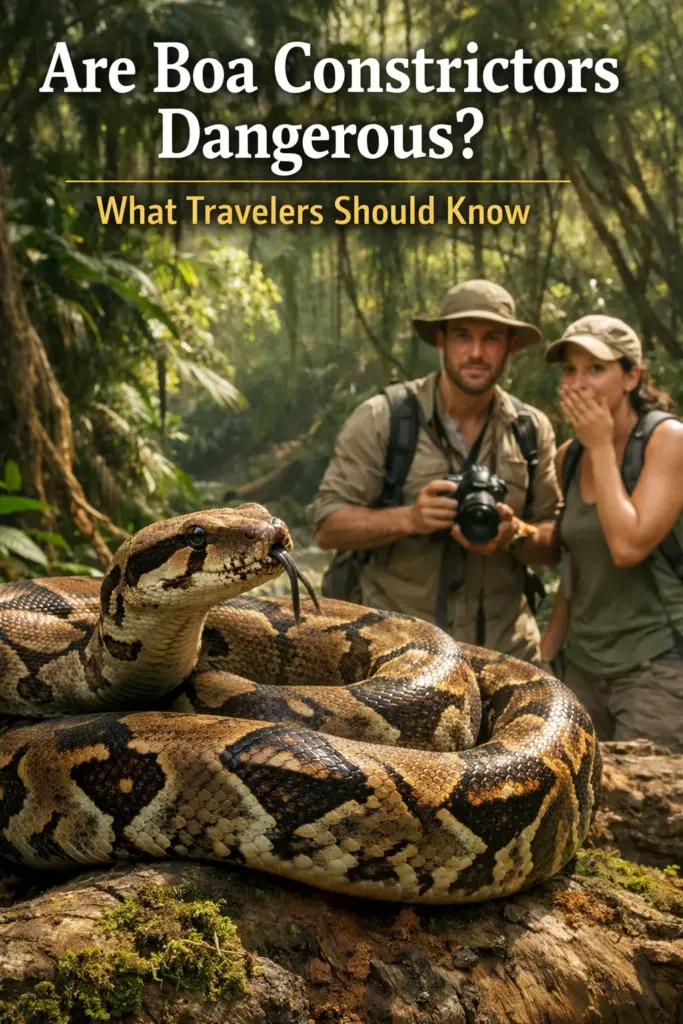
Follow these simple guidelines:
- Never attempt to touch or handle a wild snake
- Keep a respectful distance
- Always follow your guide’s instructions
- Wear proper footwear during jungle walks
Guided Amazon wildlife tours prioritize safety while ensuring authentic encounters.
Responsible Wildlife Encounters
Ethical eco-tourism means observing animals without disturbing them. Flashlights should never be shined directly into a snake’s eyes for prolonged periods. Animals should never be removed from their habitat for photographs.
Choose tour operators that promote conservation and respect for local ecosystems.
The Experience of Seeing a Boa Constrictor in the Amazon
There is something profoundly humbling about standing in the rainforest at night, listening to the sounds of the jungle, when your guide quietly signals for you to stop.
Your heart beats a little faster.
A beam of light reveals patterned scales blending perfectly with bark. The snake is motionless, ancient, patient.
In that moment, travel becomes more than sightseeing. It becomes connection.
The Amazon rainforest is not a zoo or a theme park—it is a living, breathing ecosystem where predators and prey follow rhythms older than human history.
Seeing a boa constrictor in the wild is not about danger. It is about respect. It is about understanding that we are visitors in a world far more complex than we imagined.
Adding Boa Constrictor Sightings to Your Amazon Travel Itinerary
Whether you explore from Iquitos, venture deep into Tambopata National Reserve, or cruise quietly along the Amazon River, encountering a boa constrictor is a highlight of any Amazon adventure.
With the right guide, the right season, and a spirit of curiosity, you may find yourself face to face with one of the rainforest’s most iconic reptiles.
And when you do, you will understand why travelers return from the Amazon forever changed.