Deep within the lush green canopy of the Peruvian rainforest, stories move like the rivers—alive, powerful, and timeless. Peru Amazon superstitions are not mere tales; they are sacred threads woven into daily life, guiding communities through mystery, danger, healing, and hope.
From the winding waters of the Amazon River to the dense forests of Manu National Park and Tambopata National Reserve, the jungle whispers legends that have survived for centuries.
Let’s step into this mystical world.
The Origins of Peru Amazon Superstitions
Indigenous Worldviews and Amazonian Cosmology
The indigenous peoples of the Peruvian Amazon view the world as a living being. Trees, rivers, animals, and even the wind possess spirit and consciousness. This belief system—often called Amazonian cosmology—shapes how communities interact with nature.
Unlike Western thought, the Amazonian worldview sees no separation between the physical and spiritual realms. Everything is connected. The forest listens. The river remembers.
The Role of Oral Tradition
For generations, myths and legends have been passed down through storytelling. Elders teach children about forest spirits, protective rituals, and unseen dangers lurking in the jungle. These stories preserve cultural identity and practical survival knowledge.
Famous Myths and Legends of the Peruvian Amazon
The Pink River Dolphin (Bufeo Colorado)
The legendary Bufeo Colorado is inspired by the real pink dolphin found in the Amazon River. Known scientifically as the Amazon river dolphin, this creature transforms—according to myth—into a handsome man during festivals to seduce women.
Many jungle communities still warn daughters to be cautious during celebrations near rivers.
The Chullachaqui – Guardian of the Forest
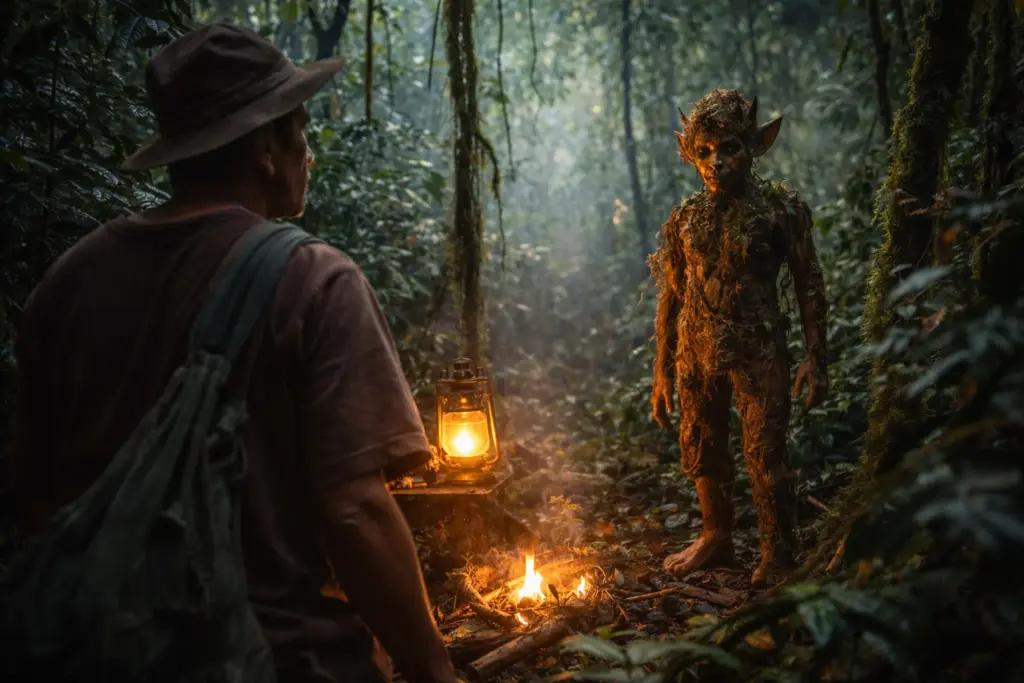
One of the most feared jungle legends is the Chullachaqui, a shape-shifting forest spirit. He protects the jungle from hunters who disrespect nature. Travelers who wander off trails risk being led astray by this trickster spirit.
Even today, guides in remote areas share stories of unexplained forest disorientation.
The Yacumama – Mother of the Waters
Yacumama translates to “Mother of Water.” This gigantic serpent spirit is believed to live in deep Amazonian rivers. Before entering unfamiliar waters, some locals blow tobacco smoke as a sign of respect.
The legend reinforces caution in dangerous river zones.
Tunche – The Jungle Spirit
The Tunche is a mysterious whistling spirit said to roam at night. Hearing its whistle in the darkness is considered a bad omen. Many jungle communities avoid traveling after sunset because of this belief.
Shamanism and Spiritual Practices in the Amazon
Ayahuasca and Sacred Plant Ceremonies
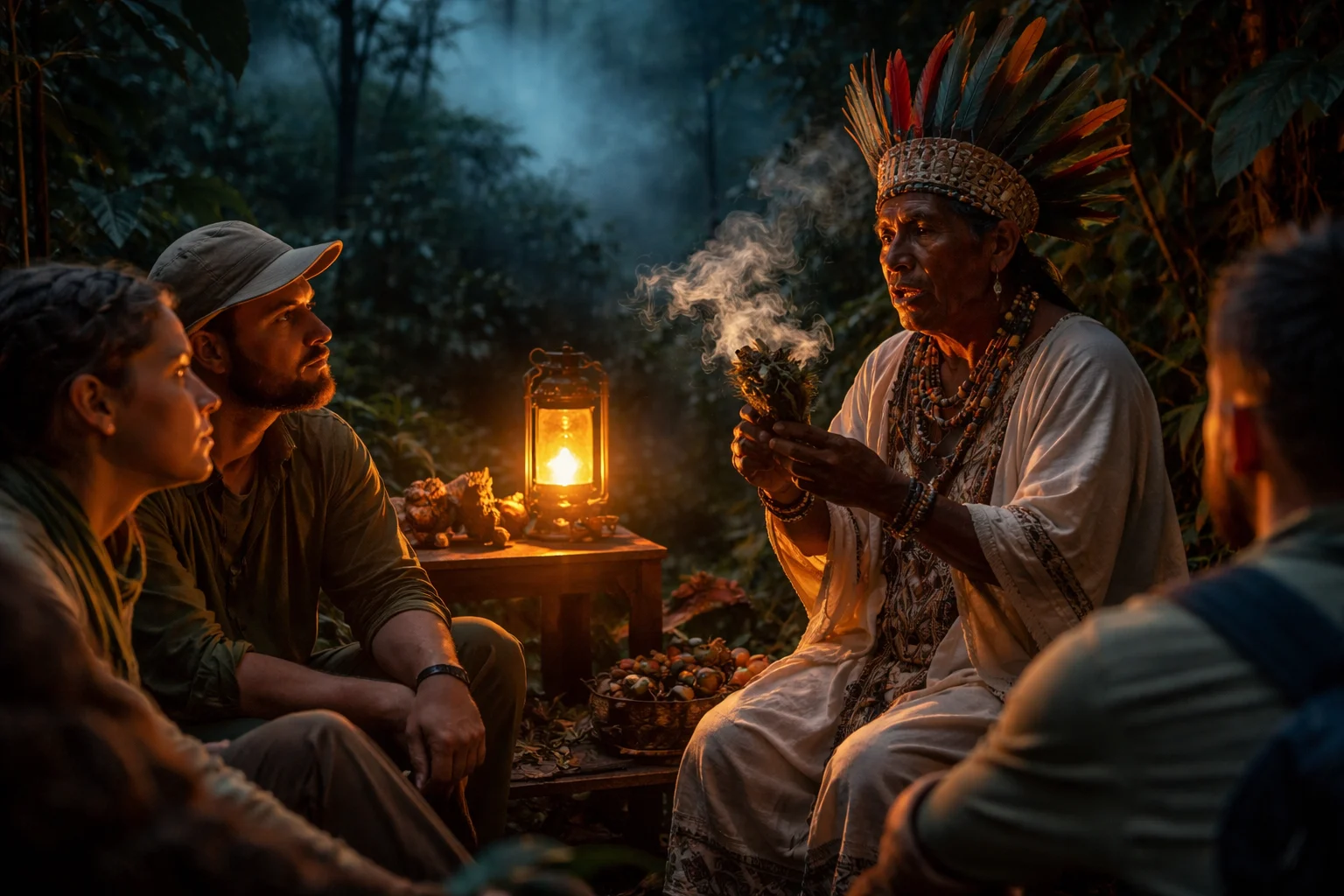
No discussion of Peru Amazon superstitions is complete without mentioning ayahuasca. This sacred plant medicine plays a central role in spiritual healing ceremonies led by shamans.
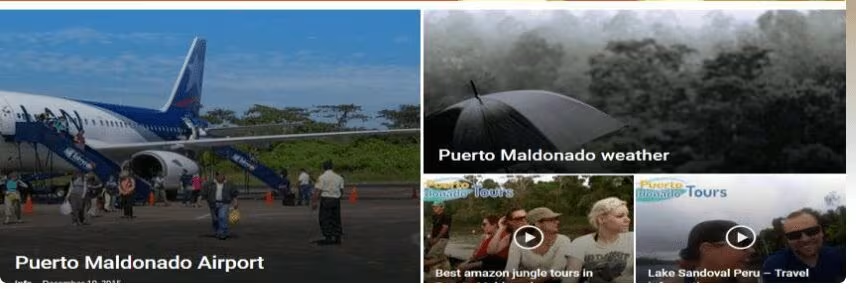
Many ceremonies take place near Puerto Maldonado, the gateway to the southern Amazon.
Ayahuasca rituals are rooted in deep spiritual belief systems—not tourism trends. Participants seek healing, clarity, and connection with the spirit world.
Healing Rituals and Energy Cleansing
Shamans use medicinal plants, chants (icaros), and smoke cleansing rituals to remove negative energy. These practices blend spiritual belief with botanical knowledge accumulated over thousands of years.
How Superstitions Influence Daily Life in the Jungle
Taboos and Jungle Etiquette
In the Amazon, respecting nature is not optional—it’s survival.
Common jungle superstitions include:
- Never mocking animals
- Avoiding certain rivers at dusk
- Not speaking ill of the forest spirits
- Respecting sacred trees
These taboos foster environmental protection long before modern conservation existed.
Sacred Animals and Natural Signs
Animals are spiritual messengers. The call of a bird, the sudden appearance of a snake, or unusual insect activity may signal warnings or blessings.
This deep spiritual interpretation strengthens harmony between people and ecosystem.
Experiencing Amazon Superstitions as a Traveler
Modern travelers can respectfully explore Amazon folklore through cultural immersion tours.
Cultural Tours in Tambopata
In Tambopata National Reserve, guided jungle tours often include storytelling nights where local guides share myths around campfires.
Indigenous Experiences in Manu National Park
Manu National Park offers opportunities to learn about indigenous traditions in protected rainforest environments.
Visiting Puerto Maldonado
The city of Puerto Maldonado serves as the main access point for exploring jungle spirituality and traditions in southern Peru.
Here, visitors can learn about:
- Jungle legends
- Shamanic practices
- Indigenous crafts
- Traditional plant medicine
Why Peru Amazon Superstitions Still Matter Today
In a rapidly modernizing world, Peru Amazon superstitions remain powerful cultural anchors. They:
- Protect biodiversity
- Preserve indigenous identity
- Teach respect for nature
- Offer spiritual insight
What outsiders may call “myths” are, for Amazonian communities, wisdom encoded in story form.
The jungle is not silent—it speaks through legend.
And for those who listen carefully, Peru’s Amazon rainforest reveals not only extraordinary biodiversity but also a deeply spiritual universe where rivers have memory, animals have souls, and every tree stands as a guardian of ancient truth.