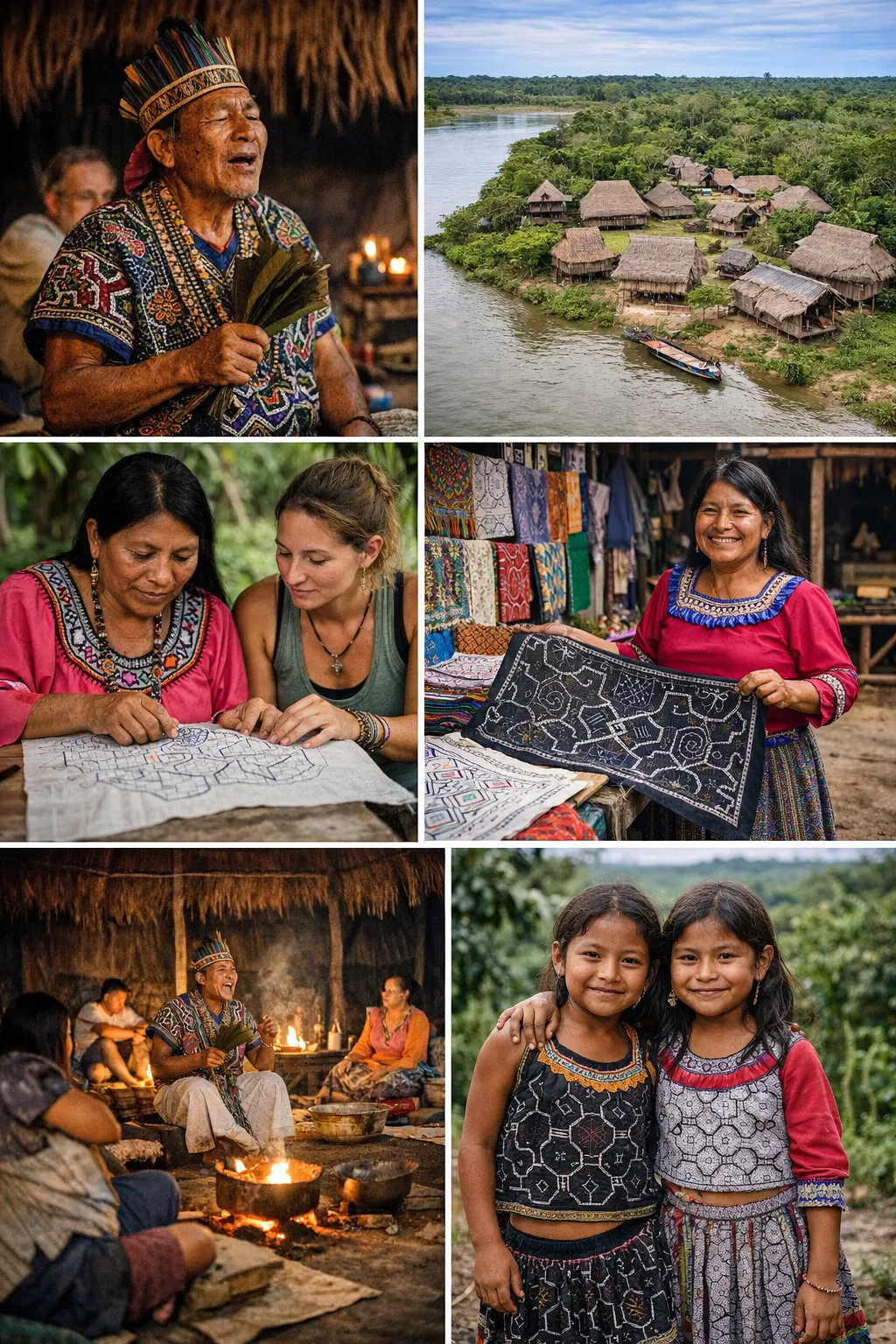
Deep in the Peruvian Amazon, along the winding waters of the Ucayali River, lives one of the most artistically and spiritually renowned Indigenous groups of South America — the Shipibo Conibo. For travelers seeking more than sightseeing, visiting a Shipibo Conibo community offers a profound journey into culture, healing traditions, and ancestral wisdom that has endured for centuries.
This guide explores who the Shipibo Conibo are, where to meet them, how to respectfully experience their traditions, and what makes their art and spiritual practices so significant in Amazonian travel.
Who Are the Shipibo Conibo?
The Shipibo Conibo are an Indigenous ethnic group native to the Peruvian Amazon, primarily located in the Ucayali region. Their territory stretches around the vibrant jungle city of Pucallpa, often considered the cultural heart of Shipibo life.
History and Origins in the Peruvian Amazon
Historically, the Shipibo and Conibo were separate but closely related groups who later merged through intermarriage and alliance. For generations, they have lived in harmony with the Amazon rainforest, navigating its rivers, cultivating crops, and preserving their oral traditions.
Despite pressures from colonization, logging, and modernization, the Shipibo Conibo have maintained strong cultural continuity. Today, many communities balance traditional lifestyles with modern realities while actively preserving their language and spiritual heritage.
Language, Beliefs, and Daily Life
The Shipibo language belongs to the Panoan linguistic family and remains widely spoken. Spirituality is woven into daily life, with the rainforest viewed as a living, intelligent ecosystem inhabited by plant and animal spirits.
Families often live in wooden homes raised above the ground, and daily routines revolve around fishing, farming, crafting, and community gatherings. Music, storytelling, and ceremonial chants remain central to their identity.
The Meaning of Kené Sacred Designs
Perhaps the most recognizable aspect of Shipibo culture is kené — intricate geometric patterns that symbolize the energetic blueprint of the universe. These designs are not merely decorative; they represent sacred cosmology.
Kené patterns are believed to be visions received during spiritual ceremonies, particularly those involving ayahuasca. Women traditionally paint or embroider these designs onto textiles, ceramics, and even skin during festivals.
Where to Visit Shipibo Conibo Communities
Pucallpa – The Heart of Shipibo Culture
Most travelers begin their journey in Pucallpa, a bustling jungle city accessible by plane from Lima. Surrounding Pucallpa are numerous Shipibo communities that welcome respectful visitors.
The nearby Yarinacocha Lagoon is home to artisan markets and cultural centers where travelers can learn about Shipibo traditions before venturing deeper into rural villages.
Community-Based Tourism Experiences
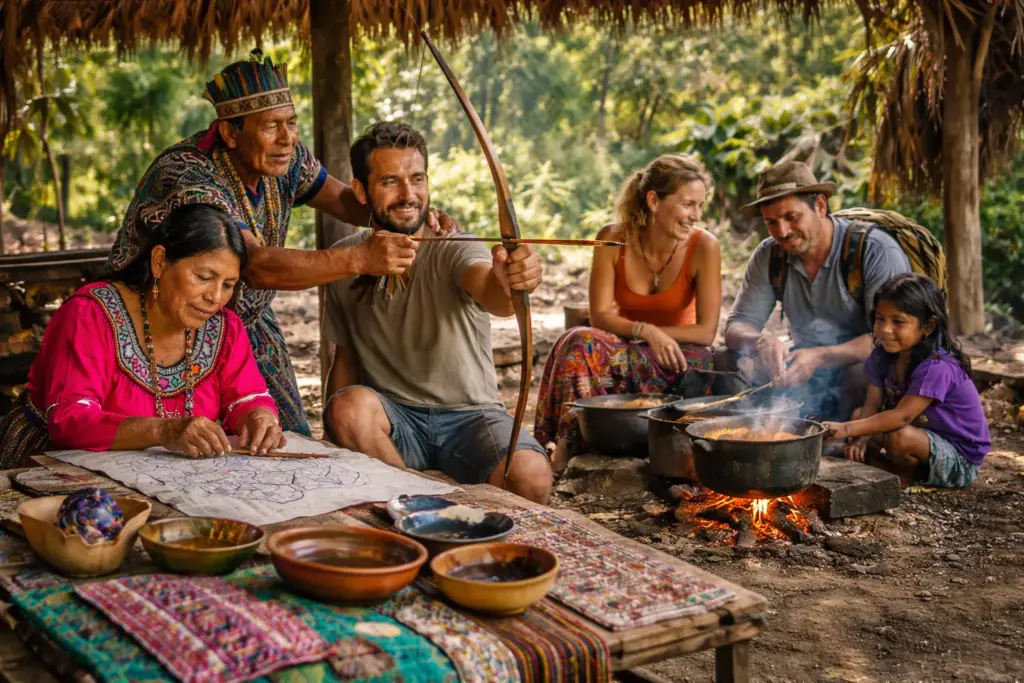
Community-based tourism allows visitors to stay in villages, participate in daily activities, and learn directly from local families. Activities may include:
- Learning traditional embroidery
- Participating in fishing trips
- Cooking Amazonian dishes
- Listening to ancestral music
These immersive experiences provide cultural exchange rather than passive observation.
What to Expect During a Village Visit
Expect simplicity. Accommodations are often basic but comfortable. Electricity may be limited. The reward is authenticity — mornings filled with jungle sounds and evenings under vast Amazon skies.
Visitors should approach with humility, curiosity, and respect for cultural norms.
Shipibo Conibo Ayahuasca Retreats
In recent years, the Shipibo Conibo have become internationally known for their role in ayahuasca ceremonies.
The Role of the Shipibo Shaman
Shipibo shamans, often called onanyas, are highly trained healers who undergo years of plant dietas to master medicinal knowledge. Their healing songs, known as icaros, are said to guide participants through spiritual journeys.
What Happens During a Ceremony
Ceremonies typically take place at night in a ceremonial hut. Participants drink ayahuasca under supervision while the shaman sings icaros. The experience may involve intense visions, emotional release, and spiritual insight.
It is essential to choose reputable centers that prioritize safety and ethical practices.
Choosing an Authentic and Ethical Retreat
When selecting a retreat:
- Research the center’s background
- Confirm Indigenous leadership involvement
- Avoid exploitative or commercialized operations
- Read independent reviews
Authentic retreats emphasize healing, cultural respect, and integration support.
Shipibo Conibo Art, Textiles & Handicrafts
Kené Patterns and Their Spiritual Meaning
Each kené design tells a story. Patterns symbolize rivers, cosmic paths, and healing energy. The symmetry reflects harmony between human beings and nature.
Buying Authentic Shipibo Crafts
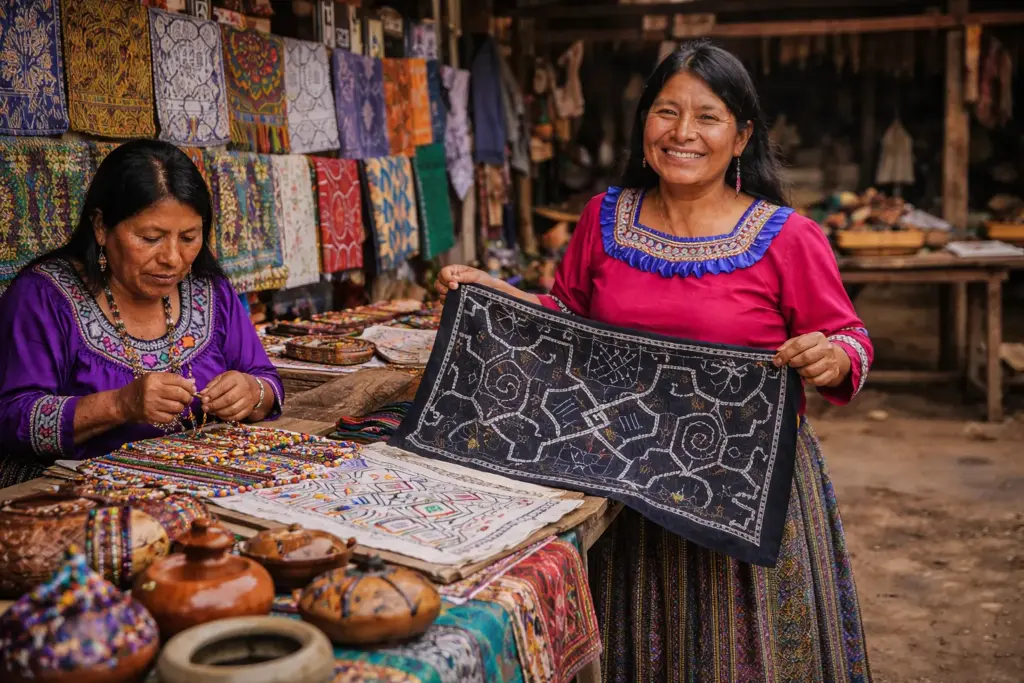
Purchasing directly from artisans ensures fair compensation. Markets in Pucallpa offer textiles, beadwork, pottery, and paintings.
Look for hand-stitched embroidery and natural dyes for authenticity.
Supporting Women Artisans
Women are the guardians of kené art. Buying their crafts supports family income and cultural preservation.
Responsible Travel to Shipibo Communities
Cultural Respect Guidelines
- Ask before taking photos
- Dress modestly
- Learn basic greetings
- Avoid bargaining aggressively
Sustainable Tourism Practices
Choose tours that invest in community projects, education, and environmental protection.
How Your Visit Can Make a Positive Impact
When done ethically, travel can:
- Strengthen cultural pride
- Generate sustainable income
- Preserve ancestral knowledge
Final Thoughts
Traveling to meet the Shipibo Conibo is not a typical Amazon excursion. It is a journey into living tradition — one where art is medicine, songs are maps of the spirit world, and the forest itself is teacher.
For those seeking meaningful Amazon travel experiences in Peru, a visit to a Shipibo Conibo community offers not just adventure, but transformation.